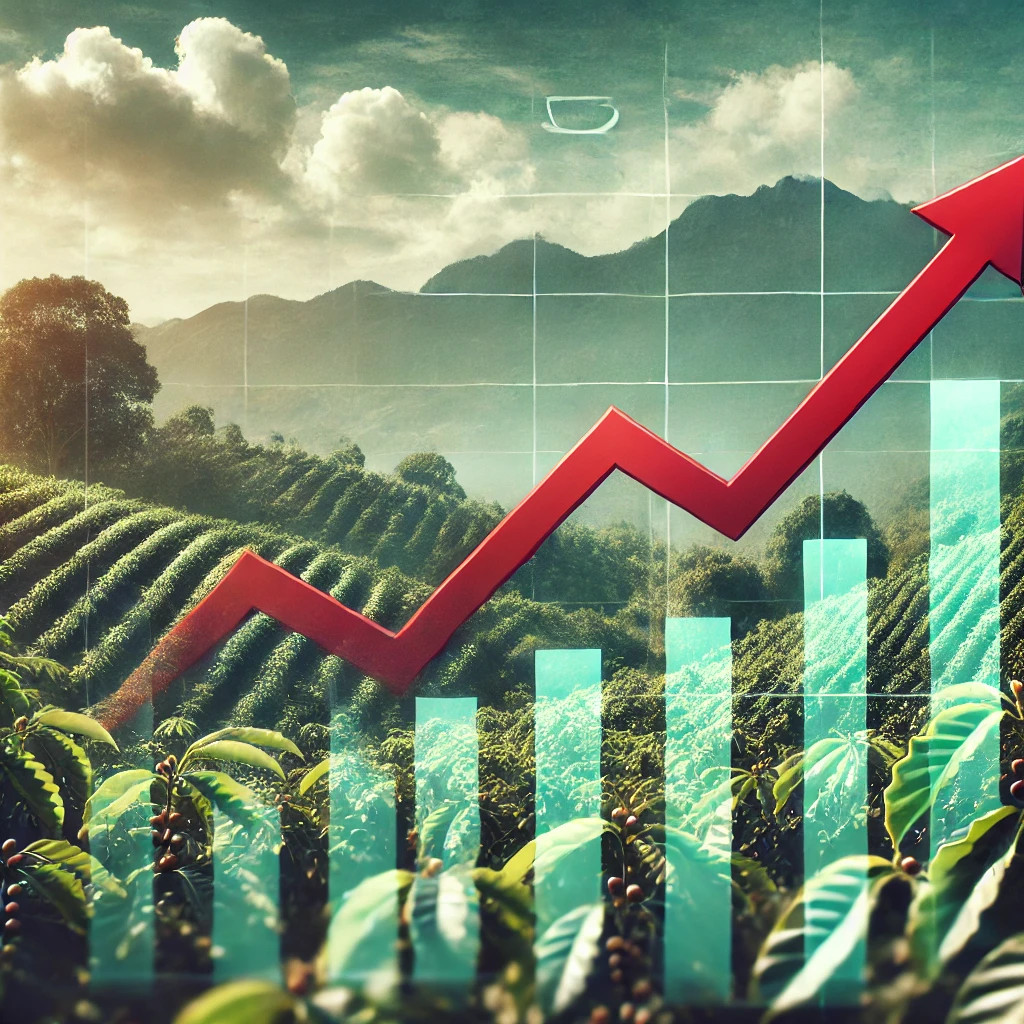
Rising coffee prices due to drought in BrazilCoffee prices are on the rise in Europe, where drought in Brazil and typhoons in Vietnam have damaged coffee production and driven up prices. Coffee drinkers now face the challenge of paying more for their daily cup, amid a crisis that threatens to continue affecting prices for a long time to come.
Natural disasters are hampering coffee production in several parts of the world. Brazil, which accounts for around 40% of global coffee production, has been hit by one of the worst droughts in decades. This has had a serious impact on Arabica bean growing areas, leading to sharply reduced harvests. It is estimated that the harvest for 2023-2024 could be reduced by as much as 20%.
Minas Gerais, Brazil's largest coffee-producing state, has been particularly hard hit, with a longer dry season and significantly lower rainfall than usual. The drought, combined with high temperatures, has put pressure on farmers, who now face a tough future.
Typhoons hit Vietnam At the same time, Vietnam, the world's largest producer of Robusta beans (often used in instant coffee), has been affected by Typhoon Yagi. The typhoon devastated large parts of the central highlands, an important area for the country's coffee production. Thousands of hectares of coffee plantations were destroyed, and the damage will affect both current harvests and future production potential, as the affected trees may take several years to recover.
Price increase due to a perfect storm of problems
The combined effect of the drought in Brazil and the typhoon in Vietnam has led to a sharp increase in coffee prices. The International Coffee Committee reports that prices rose by almost 20% in the third quarter of 2024, the highest level in almost a decade. Arabica prices have risen from $1.80 (€1.62) to over $2.50 (€2.25) per pound, while Robusta prices have increased by 25%, to over $2,000 (€1,796) per tonne.
Long recovery expected Experts, such as Katharina Erfort from Inverto, are pessimistic about the prospects for a rapid recovery. She believes that the long-term effects of climate change, with extreme weather becoming increasingly common, make stability in the sector unlikely in the short term. In addition to weather problems, global demand for coffee is also increasing, especially in emerging markets such as Asia, which may continue to drive up prices.
Coffee prices skyrocket in Europe
In Europe, where coffee consumption is a daily habit for many, the effects of rising prices are particularly noticeable. Germany, Europe's largest coffee market, has seen retail prices for coffee increase by an average of 10% since 2022. A survey by the European Coffee Organisation found that nearly 65% of cafés in Europe have raised their prices by between 5% and 15% since the beginning of 2023.
The global coffee market faces major challenges. With continued climate change and extreme weather affecting harvests and production, there is a risk that European coffee drinkers may have to get used to even higher prices in the future.